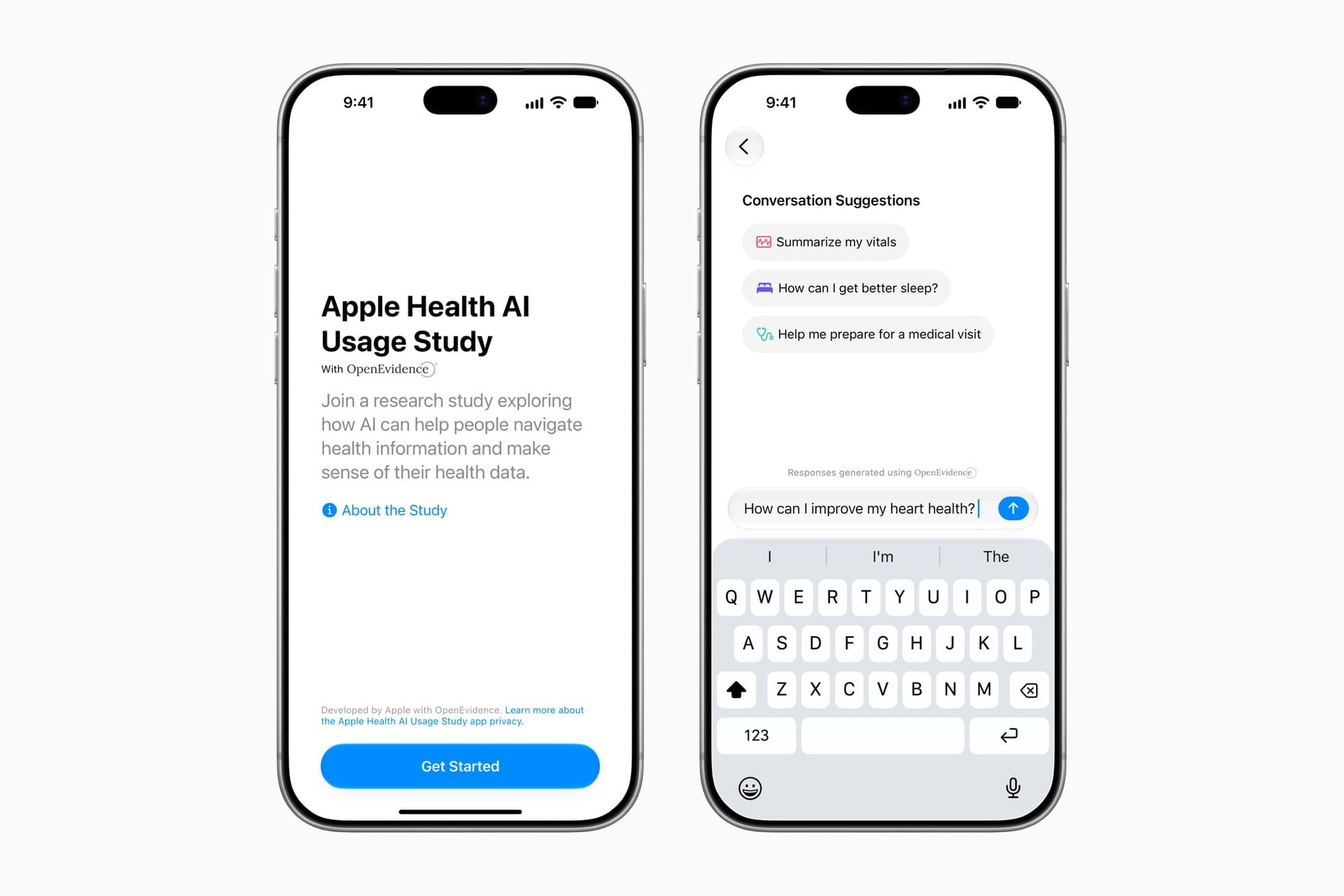
Apple announced the Apple Health AI Usage Study, a virtual research study in the United States run with OpenEvidence, a clinical AI platform. It aims to show how people use conversational health AI: how much they trust it, how well they understand it, how good the answers are and whether the tools change what they do about their health, Apple said.
Participants use a dedicated study app to ask everyday health questions. Complex medical information is paraphrased in plain language, with linked peer-reviewed citations from sources such as The New England Journal of Medicine and the Journal of the American Medical Association. They can also choose to share HealthKit data such as resting heart rate, activity, sleep or lab results, and the study will look at how health AI might help people prepare for clinical visits.
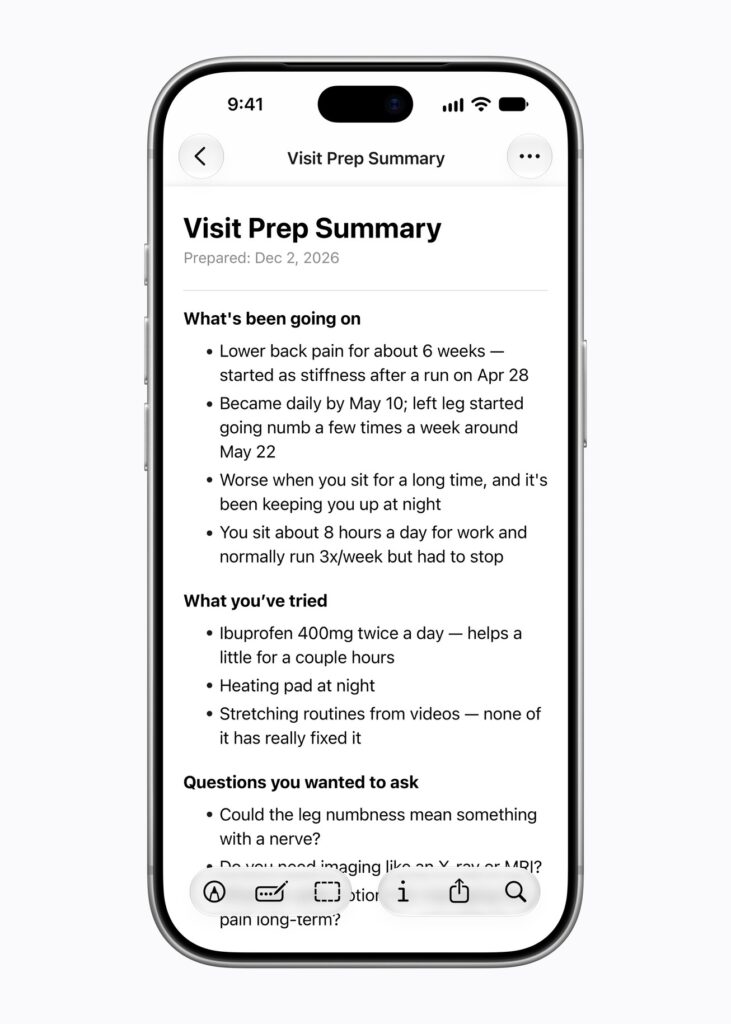
Apple stresses that the app is not meant to diagnose or treat any condition and that study data will not be used to train AI models. Safety guardrails flag potentially concerning questions and suggest speaking to a healthcare provider.
Sumbul Desai, M.D., Apple’s vice president of Health and Fitness, said responsible innovation “starts with scientific rigor and clinical grounding”. Robert M. Wachter, M.D., chair of the Department of Medicine at UCSF, added: “Patients and clinicians are both turning to AI, but the tools they use are being built and tested in separate worlds.”
Why it matters
Apple is running a formal study rather than simply shipping a feature, as it did with the Apple Heart Study and the Women’s Health Study. The redesigned Health app already added AI-powered tabs and a “Health Age” feature. In our view, the study suggests Apple wants evidence on real-world use and trust before building further health AI tools.
What it means outside the US
Enrolment is limited to US residents, so readers in the UK, EU and elsewhere cannot take part. Apple has not said whether the study, or any features that come out of it, will expand to other countries.