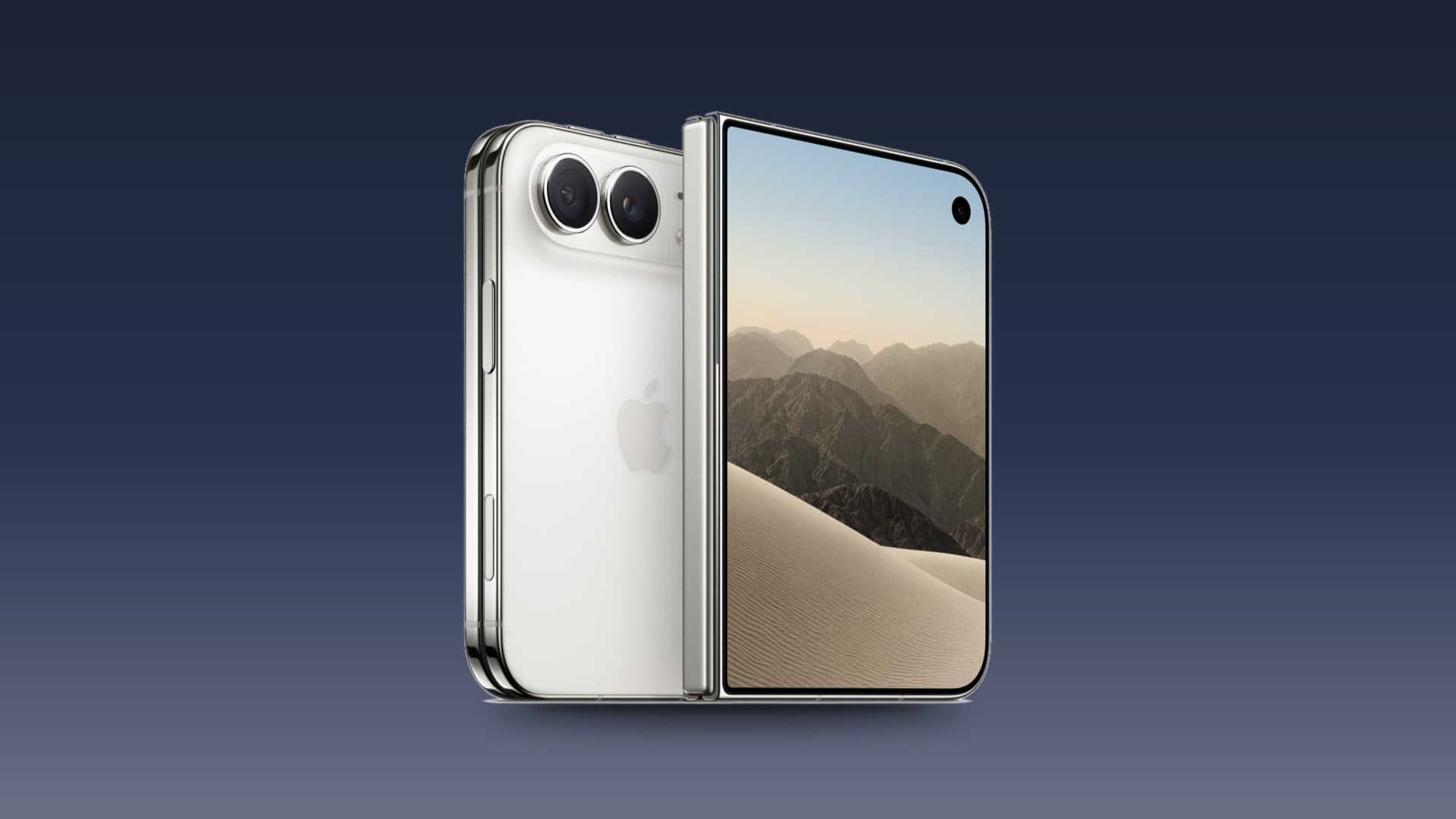
YouTube channel HTX Studio has used a CT scan to look inside the iPhone Duo’s hinge, a day before Apple’s first foldable goes on sale on 23 October. Its analysis splits the hinge into six sections and found that the phone can hold its screen open at any angle between 15 and 145 degrees.
Because the team could not take its review unit apart, it combined the CT images with Apple’s official materials to build a 3D model of the mechanism. Pivot points link each half of the phone to a central shaft, and rows of gears pass rotation from one side to the other, so both halves always turn by the same amount. The mechanisms are mirrored at the top and bottom, and a gap in the middle leaves room for the flex cables that connect the two halves.
How it holds an angle
The free-stop behaviour comes from springs pressing against shaped cams. “As we fold it, the cams compress the springs, which push back, and the resulting frictional torque overcomes the phone’s own weight,” HTX Studio explains in the video. Near the closed position, magnets take over and pull the two halves together.
Inside the fold, the hinge leaves space for the display to bend into a teardrop-shaped curve, which HTX measured at about 3.85mm at its widest point. The video also looks at the inner screen’s nano-texture surface, which scatters reflections and makes the crease harder to see.
Scratch test
In a pencil-hardness test with a constant 100g load, a 6H pencil left faint marks that were visible under bright light but could not be felt, while an 8H pencil left scratches you could feel. Those are pencil grades, not Mohs hardness ratings. AppleInsider has a longer breakdown of the hinge findings.
The hinge was one of the most praised parts of the device in the first iPhone Duo reviews.